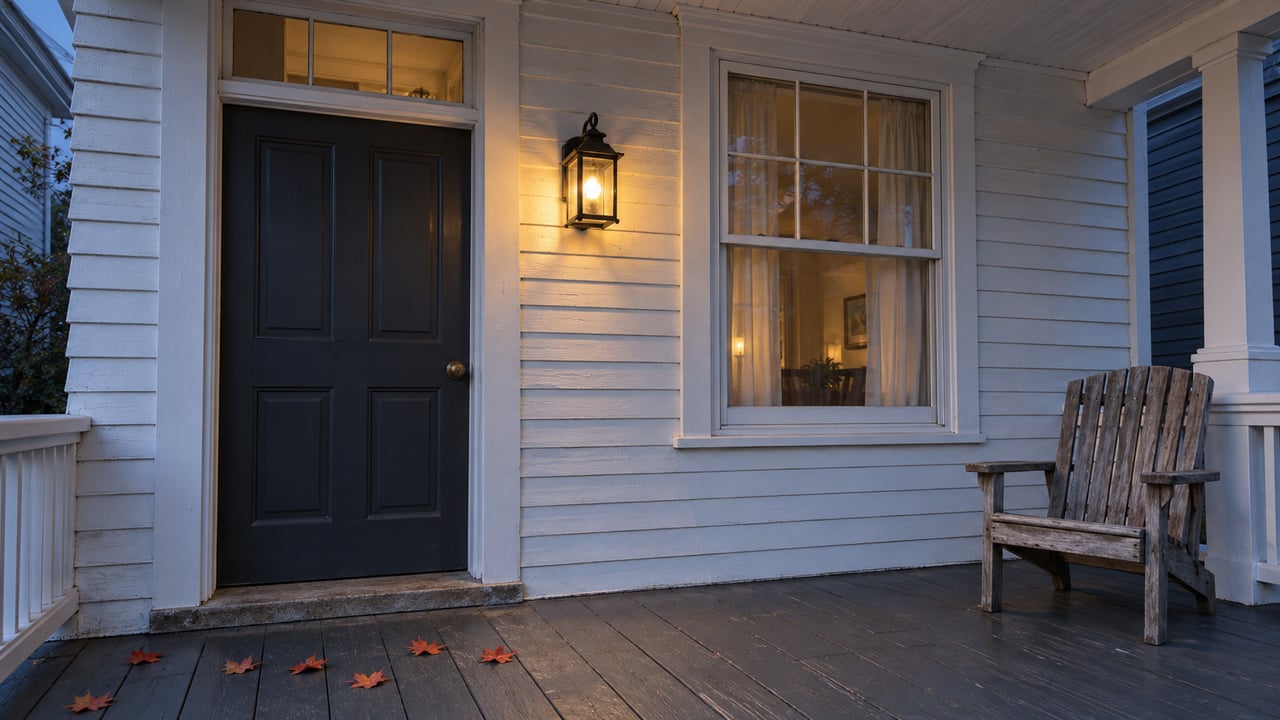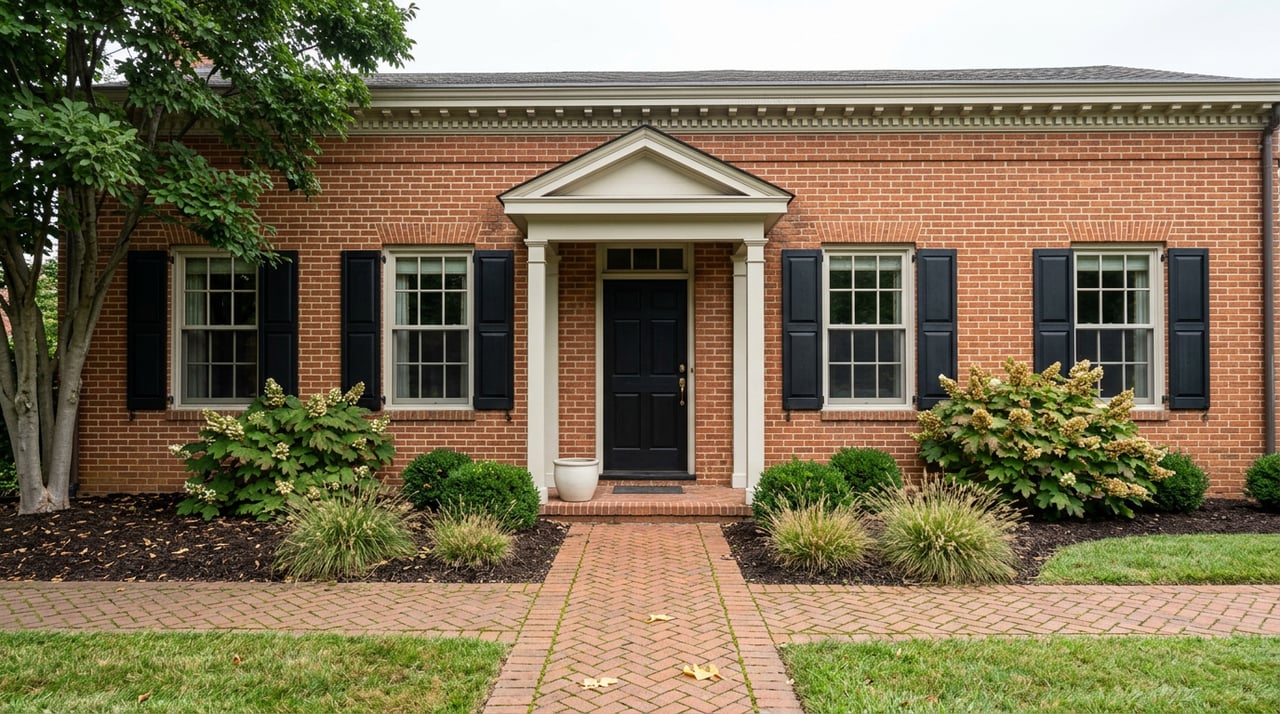
You tour a house on Genesee Street Hill. The brick is warm, the trim is crisp, the porch has the kind of proportions that only happen when someone got it right in 1860 and nobody's messed with it since. Your agent points out that the block sits inside a historic district. You may wonder what that designation means for exterior projects.
The village's survey identifies a historic core larger than the mapped district. If you're shopping or selling near the hill, understanding the boundary and review process can help you plan exterior work.
The Mapped District Covers About Twelve Acres
The Genesee Street Hill–Limestone Plaza Historic District went onto the National Register in 1983, according to the village's own history page. It covers roughly 42 to 44 buildings across about 12 acres, running along East Genesee Street from Limestone Plaza up to Chapel Street near the top of the hill. Limestone Creek forms the natural western edge.
Two addresses inside that boundary carry real weight. The Hurd House at 315 East Genesee Street is a Federal-style brick building that has served as a doctor's office for generations and remains in excellent condition. A few doors over on Academy Street, the Cleveland House at 109 is the Greek Revival home where Grover Cleveland spent his boyhood while his father pastored the Fayetteville Presbyterian Church. Neither is a museum. Both are private property, subject to the same review process any owner on that stretch has to follow.
What a Certificate of Appropriateness Actually Requires
Village of Fayetteville Code Chapter 187-47 is the operative rule, and it's broader than most buyers expect. Any exterior alteration, demolition, new construction, or material change to a property's appearance visible from the street requires sign-off from the Historic Preservation Commission before a building permit can move forward. That covers siding, windows, fences, steps, paving, and light fixtures, not just additions.
What it doesn't cover is interior work. The village's own Historic District Property Owners Guide is explicit that the Commission does not review changes to interior spaces. So a full kitchen gut is your business. Swap the front door for a different style, and you're filing paperwork first.
The ordinance turns on one word: material. A repair that restores what was already there in the same material and design is a different animal from a change that alters how the property looks from the street. In practice, that means:
- Changing a fence style, adding a new dormer, swapping original windows for a different profile, or altering a porch railing falls squarely under "material change" and needs a Certificate of Appropriateness.
- Work confined to the interior sits outside the Commission's authority entirely, since the village's guide states plainly that interior spaces are not part of its review.
- Anything not visible from a public street or alley is also outside the ordinance's reach, since the code's language is tied to appearance from the street.
According to the Village of Fayetteville Historic Preservation Commission, the Commission meets the second Wednesday of the month at Village Hall, and applications need to be filed with the village clerk at least two weeks ahead of that meeting to make the agenda. Once a complete application is in hand, the village's guide gives the Commission 45 days to approve, deny, or approve with modifications. That's not a weekend project. If your renovation plan assumes you'll be repainting shutters the week after closing, build the calendar math in first.
The Village Survey Identified a Larger Historic Core
The survey also describes historic resources beyond the mapped district. A Reconnaissance Level Historic Resources Survey commissioned by the village found that Fayetteville contains approximately 1,800 properties with buildings overall, and that nearly 900 of them fall inside a historic core dating to the nineteenth and early twentieth centuries. The survey describes a historic core that extends well beyond the currently mapped and regulated district.
State Historic Preservation Office staff who walked the village during that survey went further, suggesting the existing 42-building district could reasonably be expanded to reflect that larger footprint and extend the benefits of listing to more residents. Nothing has been finalized, and expansion isn't automatic or imminent; although the survey describes a historic core beyond the 1983 district boundary, that description does not change the current mapped boundary.
Recent Sales Offer Context for Older Homes
Two recent Fayetteville sales provide examples for comparison with the market figures below. 310 North Manlius Street, built in 1828, sold in April 2026 for $740,000. That closed 22 percent below its list price after 198 days on the market. Compare that to 24 Ely Drive, a 1955-built colonial that sold in January 2026 for $425,000, 8 percent above list, in just 6 days.
Neither of those homes is confirmed to sit inside the current Genesee Street Hill overlay. Over the trailing 12 months, Fayetteville homes have sold in an average of about 38 days at a median price near $400,000, up roughly 4 percent year over year. A 198-day timeline is more than five times the 38-day average cited above. These examples alone do not establish why the homes sold at different prices or on different timelines. Buyers considering older homes can check a property's location against the mapped boundary and ask about any applicable review requirements.
What This Means Before You Write the Offer
If you're looking at anything built before the postwar subdivisions that ring the village core, a few questions are worth asking before you get to the number:
- Confirm whether the specific parcel sits inside the mapped Genesee Street Hill–Limestone Plaza boundary. Age alone doesn't answer this. The village's zoning map does.
- If it's inside the boundary, price the Commission's monthly cadence and 45-day review window into your renovation timeline, not just your contractor's quote.
- If it's outside the boundary today, remember that the survey describes a broader historic core but does not itself expand the mapped district.
- Ask your inspector and contractor to separate normal maintenance from material change early. That distinction is what determines whether you're filing paperwork or just picking up a paintbrush.
FAQ
Does repainting my house require a Certificate of Appropriateness? The ordinance is triggered by a material change in appearance, so restoring the same color and material is a different question from changing them. If you're unsure where a specific project falls, the Commission's monthly meeting is the place to ask before you buy paint.
What if my house isn't in the historic district today? It's worth checking the village's zoning map directly rather than assuming based on age or street. And keep in mind the village's own preservation survey found hundreds of properties outside today's boundary that share the same historic-core designation criteria.
Does this affect what I can sell my house for? The cited examples show different sale prices and marketing times, but they do not establish what caused those differences. For a specific property, confirming whether the boundary applies and reviewing any Certificate of Appropriateness history can help clarify the applicable review process.
Buying or selling something with this much history behind it deserves a plan built around the specifics, not the assumptions. Jeremy Allen works Fayetteville and the surrounding Syracuse market daily and can walk you through exactly what a given address does and doesn't fall under before you write an offer or list. Start with a Get Your Instant Home Valuation to see where your property stands today.
This article is general information, not legal, tax or financial advice. Consult a qualified professional about your situation.