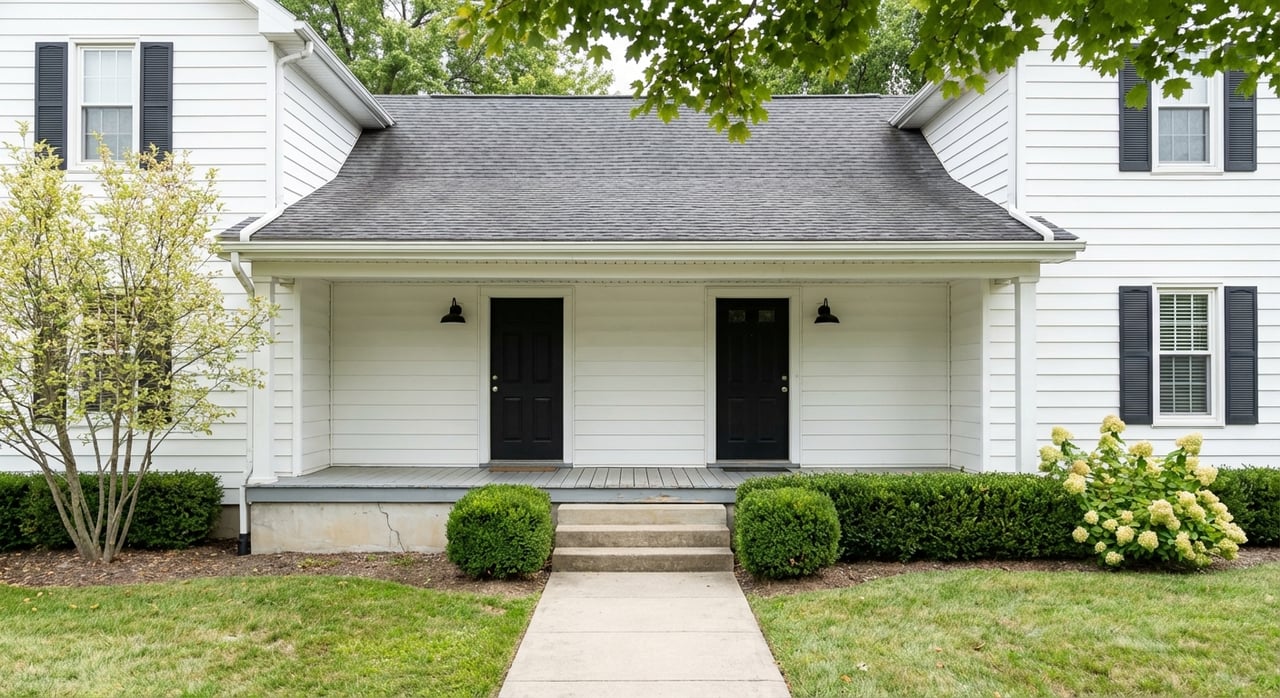
What if your first home could also help pay the mortgage? In Syracuse, you can live in one unit of a duplex and rent the other to offset your monthly costs. You are not alone in exploring this strategy. With modest entry prices across many city neighborhoods and solid rental demand near the university, hospitals, and downtown, house hacking can be a smart way to build equity.
In this guide, you will learn where a duplex house hack can work best in Syracuse, what typical prices and rents look like, how financing and local rules apply, and how to run quick numbers before you offer. You will also get a Syracuse-specific due diligence checklist you can use right away. Let’s dive in.
Why Syracuse works for house hacking
Many Syracuse duplexes trade in a practical price band for first-time buyers. Two-family properties often list between the low $100,000s and the mid‑$200,000s depending on neighborhood and condition. That lower entry point can make owner-occupant financing accessible and help you start building equity sooner.
Rents are the second half of the equation. Citywide asking rents have averaged about $1,500 to $1,750 per month in recent periods, according to current RentCafe data. HUD’s 2026 Fair Market Rents for Onondaga County are lower for some unit sizes, with benchmarks around $1,123 for a 1‑bed and $1,392 for a 2‑bed. In stronger micro‑markets close to Syracuse University, downtown, and the medical centers, advertised asking rents often sit above those HUD benchmarks.
The takeaway: Syracuse offers relatively attainable purchase prices and a tenant base tied to major anchors, but your cash flow depends on specific unit size, actual leases, property taxes, and property condition. Verify numbers block by block.
How financing works for 2–4 units
Owner-occupant loans can cover duplex purchases if you live in one unit. FHA and many conventional products allow 2–4 unit financing for primary residences. If you find a place that needs work, the FHA 203(k) program can combine purchase and renovation into one mortgage. Review the HUD 203(k) overview to understand eligible repairs and process.
Loan limits are county specific and change annually, so confirm the current FHA limit for Onondaga County before you assume your max price point. A quick primer on state-level FHA limits is available here: FHA loan limits in New York. Your lender will apply local limits and underwriting rules for duplexes.
Tip: Pre-qualify with a lender that regularly closes 2–4 unit, owner-occupied loans in Syracuse. Ask specifically about 203(k) timelines, contractor requirements, and appraisals for multi‑unit homes.
What to know about rules and costs
Older Syracuse duplexes often fall under New York State’s Lead Rental Registry. Syracuse is a named community in this program. If a property was built before 1980, you may face registration, inspection, and certification steps before leasing. Budget time and potential remediation costs. Review the state’s guidance on the Lead Rental Registry and inspections.
Property taxes vary by municipality and can materially change your monthly payment. Onondaga County’s effective tax burden runs higher than the national median. Always pull the actual tax bill for the parcel you are considering. For context on county-level property tax patterns, start with PropertyShark’s Onondaga County overview, then confirm the latest bill through the assessor.
The City of Syracuse also enforces rental and property maintenance rules. Expect registration, inspections, and stricter follow-up than in the past. Plan for these steps in your offer timeline and early ownership budget.
Syracuse neighborhood guide for duplex house hackers
Below are five areas where a live-in duplex can make sense. Use these as starting points, then verify recent sales and current rents on a property-by-property basis.
University Hill and Westcott
- Who it’s for: You want consistent tenant demand near educational and medical anchors and can manage student or staff turnover. Syracuse University and Upstate Medical drive year-round interest in rentals. Learn more about the university’s footprint on the Syracuse University page.
- Typical duplex price band: Often mid‑$100,000s to upper‑$200,000s depending on proximity and condition.
- Typical rents: Above broader city averages for 1–2 bed units, especially walkable to campus or bus routes.
- Market drivers: Proximity to Syracuse University and hospitals, transit access, coffee and retail corridors.
- Main risks: Higher turnover and wear from student housing patterns, parking constraints, and stricter enforcement on shared housing configurations.
Downtown, Armory Square, and Near North
- Who it’s for: You value walkability and an amenity-rich setting that attracts professionals and medical staff.
- Typical duplex price band: Limited duplex inventory; where available, pricing often trends toward the upper end of the city range.
- Typical rents: Downtown asking rents for updated units often command a premium compared with city averages, based on current RentCafe trends.
- Market drivers: Restaurants, cultural venues, and short commutes to employment centers.
- Main risks: Fewer duplex listings, more competition from professionally managed buildings.
Strathmore and the South Side
- Who it’s for: You want a residential feel with historic architecture and parks, and you prioritize quality-of-life tradeoffs over maximum yield.
- Typical duplex price band: Frequently higher than many core-city pockets; duplex supply is thinner than single-family.
- Typical rents: Solid for well-maintained units with off-street parking and updated systems.
- Market drivers: Tree-lined streets, neighborhood parks, and stable residential character.
- Main risks: Smaller pool of duplex options, higher entry prices can reduce headline cash-on-cash returns.
Near Westside and Northside
- Who it’s for: You seek lower entry prices and are prepared for hands-on management.
- Typical duplex price band: Often in the low‑to‑mid $100,000s, with wide variation property by property.
- Typical rents: Competitive relative to price points; verify actual leases and utilities.
- Market drivers: Larger supply of small multi-family housing and long-term renter demand.
- Main risks: Property condition varies block to block, turnover and vacancy patterns differ locally, and active management is key.
Eastwood and Suburban Close‑In (DeWitt, Liverpool, Onondaga Hill)
- Who it’s for: You prefer an owner-occupant setting with strong resale prospects and stable tenancy.
- Typical duplex price band: Often mid‑$100,000s to mid‑$200,000s when available; duplexes are less common than single-family.
- Typical rents: Moderate-to-strong depending on unit size, parking, and updates.
- Market drivers: Residential stability, proximity to shopping and major roads.
- Main risks: Fewer duplex listings and generally lower gross yields versus core-city micro‑markets.
Quick underwriting math example
Use simple math to pressure‑test a potential house hack:
- Purchase price: $200,000 duplex
- Rents: Unit A $1,200 per month and Unit B $1,100 per month → Gross rent = $2,300 per month = $27,600 per year
- Rule-of-thumb expense load for an older northern city: 40 to 55 percent of gross rent. At a 50 percent assumption, net operating income is about $13,800.
- Simple cap rate: $13,800 divided by $200,000 ≈ 6.9 percent.
Small changes in taxes, insurance, or one to two months of vacancy can swing your results. Owner-occupant financing can lower your down payment, which changes cash-on-cash returns. Always pair this quick math with actual leases, the current tax bill, and a repair budget.
Syracuse-specific underwriting checklist
Work through this list before you make an offer on any duplex:
- Confirm legal unit count and certificate of occupancy. Verify any conversions were permitted.
- Compare actual signed leases and rent history to advertised market rents. Do not assume you can raise rents immediately.
- Check utilities and meters. Separate electric and heat can reduce operating costs and disputes.
- Inspect roof, heating systems, plumbing, and electric. Get repair estimates in writing.
- Review lead risk for pre‑1980 buildings and confirm status under the Lead Rental Registry. Start with the state’s lead program guidance.
- Pull the current property tax bill and note any school or special district charges. See county-level context on Onondaga property taxes.
- Understand zoning, parking rules, and neighborhood tenant patterns. Screening and turnover expectations differ by micro‑market.
- Match financing to the property. Explore FHA and conventional owner-occupant options, and consider FHA 203(k) if you need purchase-plus-renovation.
- Model operating expenses conservatively. Include taxes, insurance, maintenance, turnover reserves, and a vacancy allowance. Stress test for winter utility spikes.
Your next step
If a live-in duplex fits your goals, move quickly but with a plan. Pull three recent duplex comps in your target area, confirm current asking rents for comparable units, and price in any lead or renovation work. A local, transaction-focused agent can help you underwrite the numbers, navigate city requirements, and position your offer to win.
Ready to find the right Syracuse duplex and run the numbers together? Connect with Jeremy Allen to start your house-hack search with clear comps, lending options, and a step-by-step plan.
FAQs
What is house hacking a duplex in Syracuse?
- House hacking means you live in one unit of a 2–4 unit property and rent the other unit(s) to offset your mortgage and build equity over time.
How do Syracuse asking rents compare to HUD Fair Market Rents?
- Recent asking rents average about $1,500 to $1,750 monthly citywide per RentCafe data, while FY2026 HUD FMRs for Onondaga County are lower for some unit sizes, especially 1–2 beds.
Can I use FHA 203(k) financing to renovate a Syracuse duplex I will live in?
- Yes, many owner-occupants can use FHA 203(k) on 2–4 unit homes to finance purchase plus eligible repairs in one loan, subject to lender approval and loan limits.
What does the New York Lead Rental Registry mean for Syracuse duplex owners?
- Syracuse is covered by the state program. Pre‑1980 rental buildings with two or more units often require registration, inspections, and possible remediation; see the state guidance.
How do Onondaga County property taxes affect duplex cash flow?
- Taxes can be a large monthly cost. Review the parcel’s current bill and use county context from PropertyShark when modeling conservative expenses.