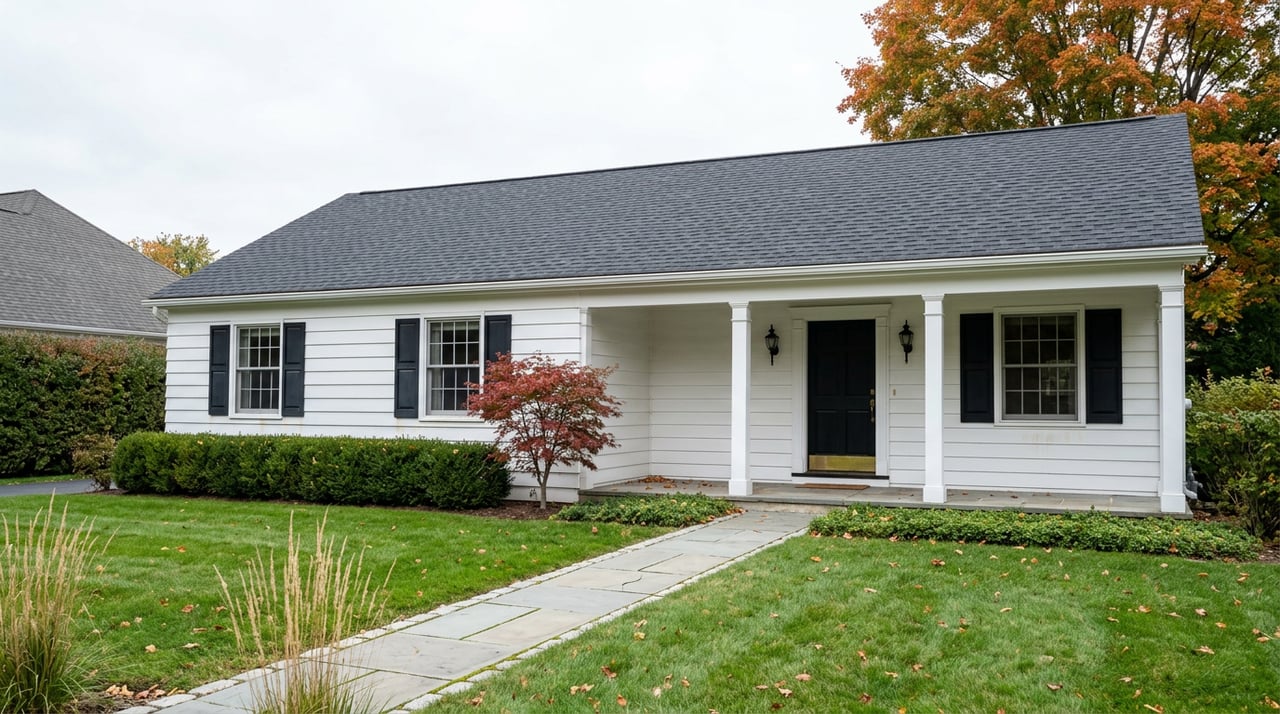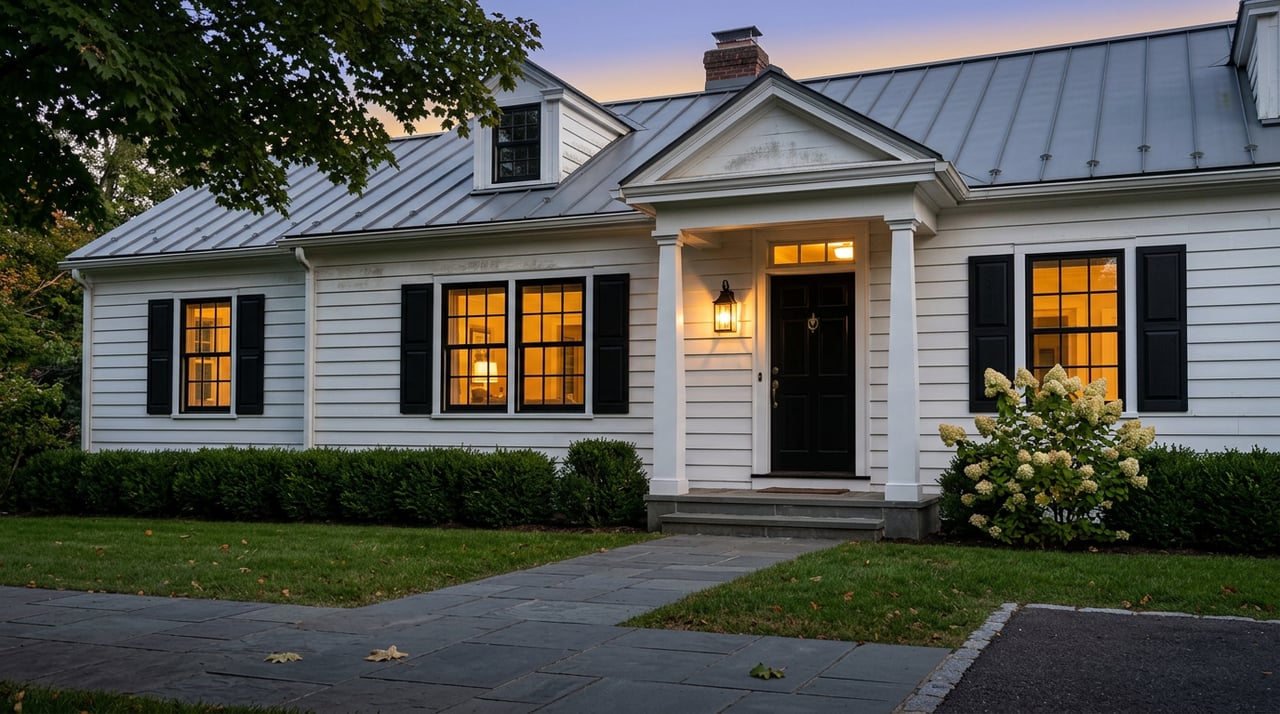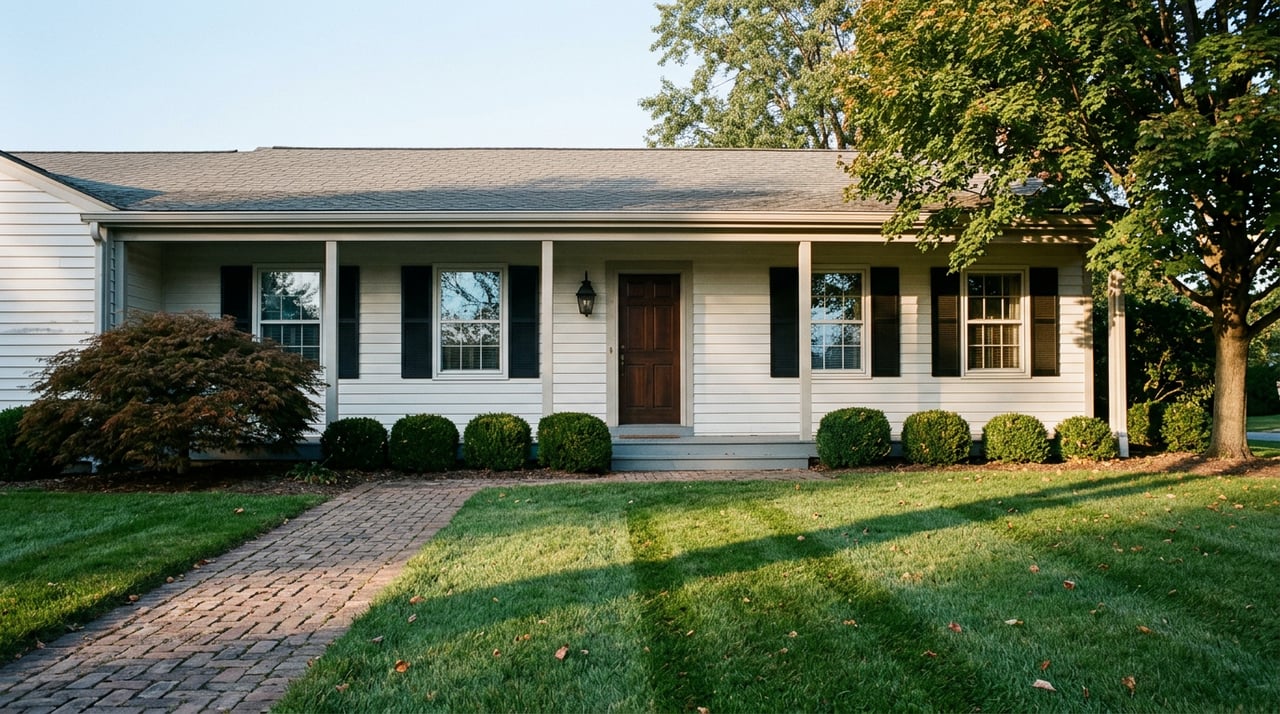
Look at two Skaneateles listing categories side by side this fall and a strange gap shows up. Homes tagged simply "waterfront," which can mean anything from true frontage to a lake glimpse from a hillside half a mile back, are moving in an average of 57 days. Narrow that same market down to homes with actual, deeded lake frontage and the average jumps to 102 days. Same lake. Same season. Same buyer pool willing to pay a premium for it. Something other than price is adding six and a half extra weeks to these closings.
The obvious guess is that true lakefront costs more, so it takes longer to find a buyer. That's not really it. Homes with genuine frontage are pricing in the $1.1 to $1.2 million range, which isn't wildly out of step with what shoreline-adjacent inventory is already commanding. The gap tracks less to what buyers are willing to pay and more to what has to happen after they've already agreed to pay it. And what has to happen involves an office in Syracuse that most Skaneateles sellers have never called.
Whose Signature You Actually Need
Skaneateles Lake is one of the few large surface water supplies in the country approved to serve drinking water without a filtration plant. That status exists because the lake stays clean enough to skip a step every other city its size has to build. It also means the City of Syracuse, thirty miles away, has a direct and permanent stake in what happens on private shoreline it doesn't own.
So Syracuse runs its own Watershed Protection Program, staffed separately from the Onondaga County Health Department that handles septic questions everywhere else in the county. Two Watershed Inspectors and a Watershed Quality Coordinator patrol the lake and the land that drains toward it, walking lakeshore properties, checking for failing septic systems, and reviewing site plans for anything that disturbs the ground. The watershed itself is broken into 48 grid zones of roughly 870 acres each, and the patrol schedule follows the calendar: zones with seasonal lakefront cottages get walked in summer, when those cabins are occupied, while more remote parcels off seasonal roads get their attention in spring and fall.
None of this runs through the county office a Skaneateles seller might assume handles septic sign-off. It runs through Syracuse, because Syracuse drinks the water.
The Paper Trail Goes Back to 1994
The watershed program has been tracking septic violations since 1994, and the record is broken out by distance from the lake: 135 violations on waterfront parcels, 68 more within 200 to 500 feet of the shoreline, and 203 beyond that. The category breakdown matters for one reason sellers tend to miss. Distance from the water doesn't get you out of the watershed's jurisdiction. It just changes how often someone from the city has actually walked your lot recently.
That has a direct consequence for anyone listing a genuine shoreline property this year. A true lakefront parcel is inspected on a summer cycle, which means whatever the last inspector saw is fresher and more likely to be sitting in a file somewhere. A parcel a few hundred feet back gets looked at less often, so any open item has had more time to go quiet without anyone following up. When a buyer's attorney or lender starts asking questions on a lakefront listing, there's a real chance the answer already exists in a Syracuse filing cabinet, discovered days or weeks into a transaction that both sides assumed was already buttoned up.
The Letter That Already Went Out
In 2025, the City of Syracuse and Cornell Cooperative Extension of Onondaga County mailed letters to watershed residents whose onsite wastewater treatment systems were older than 30 years. The letter didn't demand anything. Owners who received it are under no obligation to replace or modify their system on any deadline. But the EPA's general guidance, which the watershed program points to directly, recommends property owners start planning an upgrade once a system reaches 25 to 30 years old, since that's roughly when it approaches the end of its useful life.
If a seller's system is in that window and a letter has already gone out, that's not information a buyer's inspector has to dig for. It exists in writing, tied to the address, before the property ever gets listed. A seller who doesn't get ahead of that letter is handing a buyer's attorney a talking point for free.
On August 21, 2025, the watershed program held a public session at The Creamery in Skaneateles specifically on this subject, with Averi Davis of Syracuse University's Environmental Finance Center, longtime wastewater training advocate Mark Noga, and Onondaga County Public Health Engineer Ryan Homeyer walking residents through system basics, upgrade options, and what financial help exists. That the city considered this worth a dedicated evening session, just over a year before this fall's listing season, says the subject is live, not archival.
What the Repair Actually Costs, and Who Chips In
New York's Septic System Replacement Fund, run through the state's Environmental Facilities Corporation, reimburses up to 50 percent of an eligible septic replacement project, capped at $10,000. That's real money, but it rarely covers the whole bill on a lakefront lot.
Conventional gravity systems across Central New York generally run $8,000 to $15,000. Waterfront parcels are a different conversation. Properties near Skaneateles, along with Oneida, Cayuga, and Owasco lakes, routinely need engineered or mound systems regardless of how the soil actually tests, because county and watershed reviewers default to the stricter standard on shoreline lots. Those engineered systems run $15,000 to $30,000 or more.
Run the arithmetic on a seller who needs a full engineered replacement:
- Engineered system cost: $15,000 to $30,000
- State replacement fund reimbursement: up to $10,000 (capped at 50 percent of eligible cost)
- Net out-of-pocket exposure: roughly $5,000 to $20,000, depending on system type and whether the grant applies to the full scope of work
That's a wide enough range that it belongs in a pre-listing conversation, not a post-inspection scramble. A buyer's financing contingency doesn't wait politely while a seller figures out grant eligibility for the first time.
A Local Fix, Not a Search Engine Result
Skaneateles Excavation, Inc. is licensed to pump and inspect septic systems across both Cayuga and Onondaga counties, the two counties that split most of the watershed. For a seller who wants a straight answer on system condition before a buyer's attorney asks for one, that's a phone call that can happen this week, not after an accepted offer.
The watershed's own septic system rules and regulations, along with New York's statewide design standards under 10 NYCRR Appendix 75-A, spell out the setback and design requirements that apply to any new or replacement system. Watershed properties like those around Skaneateles Lake carry larger setback requirements than the statewide floor and go through an added layer of review from the city's watershed office before a permit is issued. That review adds time to any repair that has to happen mid-contract, which is exactly the kind of delay showing up in the 102-day average.
What This Means If You're Listing This Fall
Skaneateles home prices aren't the constraint right now. The broader market's median sale price stood at $994,502 in July 2026, the most recent month with reported data, comfortably in the range this lake has held all year. Demand is there. What's costing sellers of true lakefront property is the gap between when a buyer's team starts asking watershed-specific questions and when a seller has answers ready.
A seller who orders an OWTS evaluation before listing, checks in on whether a 2025 letter went to that address, and has a rough sense of system age against the 25-to-30-year marker isn't guessing anymore when the questions come. That's the difference between a 57-day close and a 102-day one on the same lake.
FAQ
Does the watershed program only apply to homes directly on the water? No. The watershed is defined as all land that drains toward the lake, which extends well past the shoreline. Distance from the water changes how often the City of Syracuse's inspectors walk a given parcel, not whether the property falls under the rules.
Is a septic inspection legally required before a Skaneateles Lake property can be sold? Based on the public record, there's no standalone point-of-sale inspection statute specific to this watershed the way some other regulated lakes have adopted. What exists instead is an active, ongoing patrol and violation-tracking system dating to 1994, plus a 2025 letter campaign targeting older systems. In practice, that means the information a buyer needs may already be on file in Syracuse well before anyone requests a formal inspection.
If you're weighing a listing on Skaneateles Lake this fall, or trying to figure out what a specific parcel's watershed history actually says before you make an offer, Jeremy Allen can walk through what's on file for your address and what it means for your timeline.